If you work in the security industry as an installer or system integrator, you are likely already aware of the recent publication of the new edition of the CEI 79-3:2024 standard. This is an important update that introduces more precise criteria for designing, installing, and maintaining systems intended for intrusion and robbery detection.
But the most relevant development for those who believe in true system integration is this: the standard finally addresses, in concrete terms, the interaction between video surveillance and alarm systems. And this is exactly the area in which Aylook has been working for years.
If you are an installer or system integrator operating in the security industry, you will certainly be aware of the publication of the new edition of the CEI 79-3:2024 standard, which provides criteria and requirements for determining the performance level and for the design, installation, and maintenance (both routine and extraordinary) of systems intended to signal attempted and/or completed intrusion and/or robbery within the protected area.
A new standard generally divides the professionals who have to adopt it into two groups:
- Professional installers and system integrators who purchase the standard because they identify with and recognize the value of Annex K, study it, and, by applying its requirements, use it as a distinguishing factor to stand out in the market;
- Installers and system integrators who view the standard as a list of unnecessarily complicated and excessive requirements that provide little practical value in their day-to-day activities.
Let us clarify one point immediately: this article is aimed at Level A installers and at anyone who wants to take inspiration from this new standard and its annexes to change the way they present themselves to clients (end customers), whether private individuals, businesses, public authorities, or others.
The person writing this article has been involved in the production of video surveillance equipment (Aylook) for 25 years, so a legitimate question might arise: “Why would a manufacturer of video surveillance equipment write an article about a standard dedicated to specific requirements for intrusion and robbery alarm systems?”
The answer is straightforward: in 2024, 63% of the Aylook systems supplied included built-in integration software that enables native interaction with the most well-known and widely used brands of equipment for intrusion and robbery alarm systems in Italy and abroad (AVS, EL.MO, INIM, Ksenia, Risco, Satel, Tecnoalarm).
This means that professional installers are increasingly moving toward the supply of integrated alarm and video systems. Thanks to the developments of Aylook’s R&D department, these systems communicate with each other through proprietary (native) protocols, without the need for physical connections or the transmission of generic command strings.
Returning to the CEI 79-3:2024 standard, what does it say about system integration?
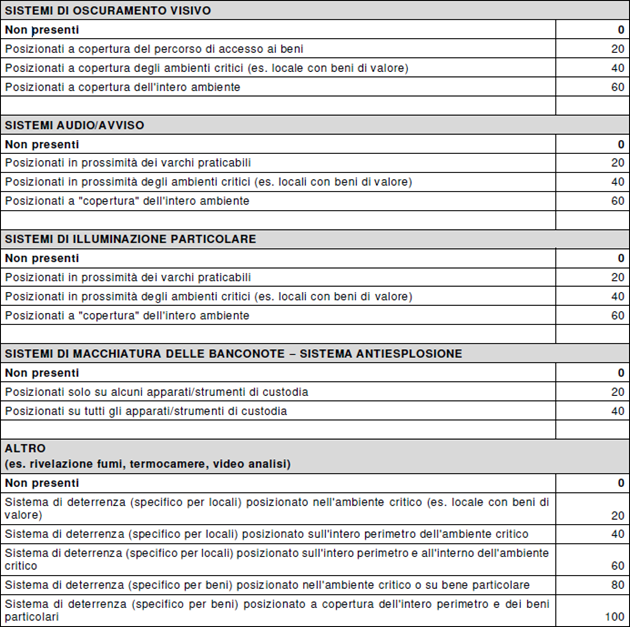
Once the installer has determined the Performance Level (LdP) according to Annex A, “Risk Assessment Method”, for the first time a document dedicated to intrusion detection systems introduces the Integrated Security Index (IIS). This is defined as a numerical value that, for the same “confirmed Performance Level”, assigns a value to integrations that do not modify the system’s LdP but increase security through “concentric subsystems IIS(a), deterrent devices and systems IIS(b), and additional detectors IIS(c)”.
What additional technologies, integrated with the intrusion alarm system, contribute to improving the security conditions of the asset being protected?
- IIS (a) Concentric Ring Protection. When the subsystem containing the asset to be protected is located within another subsystem or multiple subsystems, and these are simultaneously armed.
- IIS (b) Deterrent Devices and Systems
- Visual obscuration systems;
- Audio/alarm warning systems;
- Specialized lighting systems;
- Banknote marking systems and anti-explosion systems;
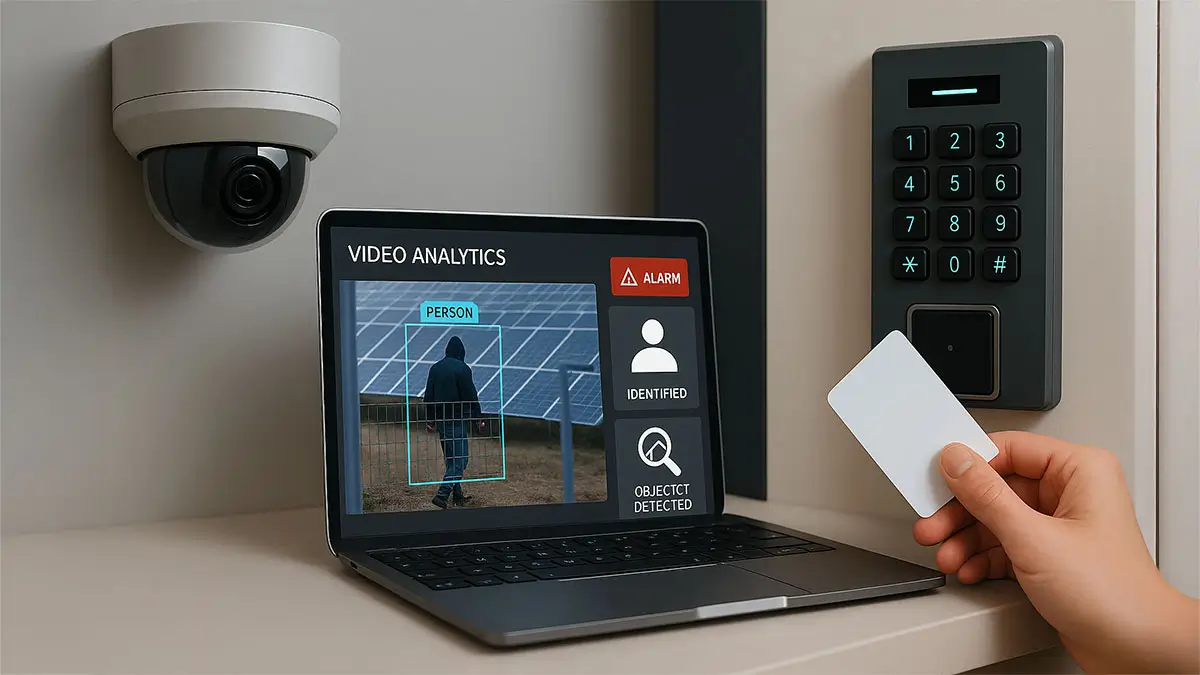
- Smoke detection systems, thermal cameras, and Video Analytics.
- IIS (c) Additional Detectors beyond those required by Tables A1 and A2 of the Detectors subsection.
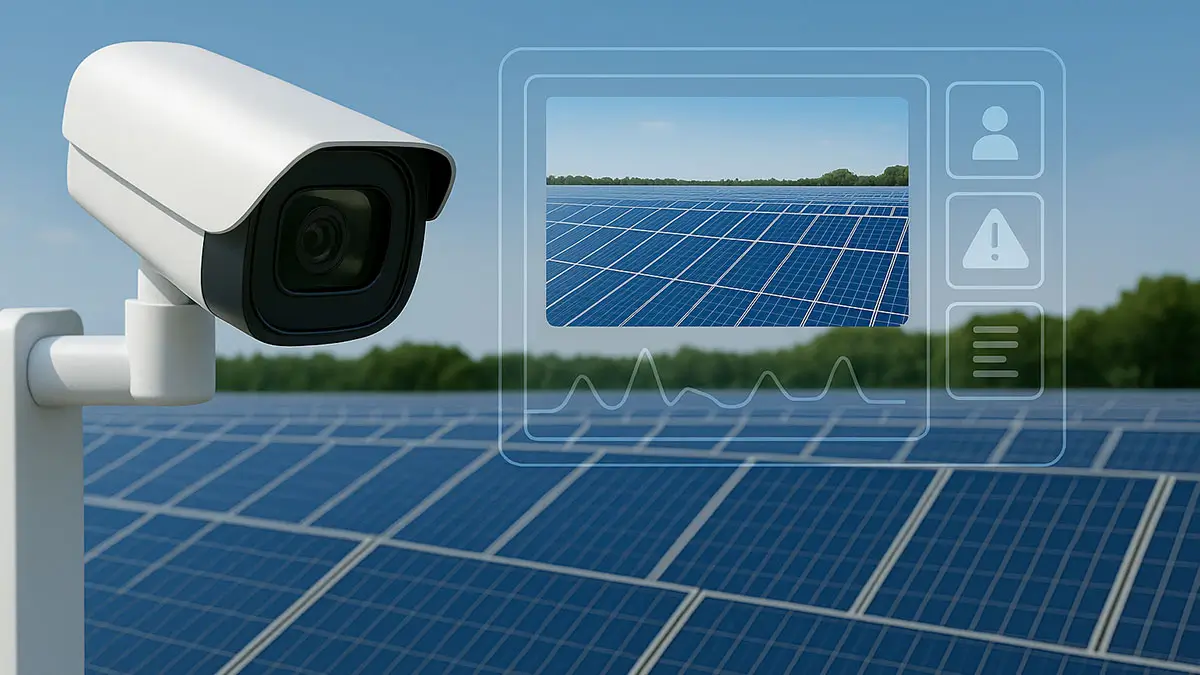
This brings us to the second and fundamental reason why Aylook considers itself part of the new CEI 79-3:2024 standard: the Aylook solution runs video analytics algorithms directly on the device and can perform video analytics on any video stream from any camera already installed on site or included in a new system design.
If 63% of the Aylook systems delivered include alarm integration capabilities, 100% are supplied with channels capable of running Video Analytics.
As can be seen from the table provided in Section L.2.2 of the standard, the highest score assigned to deterrent devices and systems is specifically attributed to Video Analytics.
Up to this point, I have discussed the Integrated Security Index (IIS), which opens the door to video analytics and system integration. Below are the sections of the standard where it is mentioned, analyzed, and discussed in detail:
References to the IIS in the standard:
| Reference | Page |
|---|---|
| Section 3.2.1 | 10 |
| Section 4 | 11 |
| Final Notes | 24 |
| Section 7.10 | 37 |
| Section L.2 | 81 |
| Table | 84 |
It is quite natural to think that there are various ways (sometimes little more than improvised workarounds) to “make systems communicate with each other”, but not all of them comply with another fundamental requirement contained in the CEI EN 50131-1 standard (the standard that specifies the general requirements for Intrusion and Hold-Up Alarm Systems (I&HAS) and defines their essential principles).
“Systems and ancillary equipment must comply with the relevant product standards, where available, or with the general requirements specified in the CEI EN 50131-1 standard, with particular attention to functional compatibility with the system (power supply and autonomy), tamper protection requirements, and tamper detection and identification. Such compliance must be documented in the project documentation.”
This raises two questions for installers and system integrators:
- Are you sure your integration provides protection against camera tampering?
- How have you calculated the backup power requirements for your video surveillance system? Is the backup power supply integrated into the system?
The Aylook solution monitors camera tampering and, thanks to native integration with intrusion alarm systems, can send an alarm to the control panel in the event of a fault or tampering. Communication between the systems is also bidirectional: the control panel monitors the correct operation of Aylook and generates an alarm in the event of an anomaly.
As for backup power, Aylook supports the NUT (Network UPS Tools) protocol, which makes it possible to continuously verify the correct operation of an uninterruptible power supply dedicated to keeping the entire video surveillance system operational.
The application of the CEI 79-3:2024 and CEI EN 50131-1 standards to intrusion detection systems integrated with video surveillance is therefore facilitated by the use of the Aylook solution, which has been designed for years to simplify the work of installers and system integrators.
This also applies during the design and pre- and post-sales phases, thanks to Aylook tools that allow you to:
- Apply video analytics to footage extracted from a smartphone or from existing video surveillance systems using the dedicated software;
- Calculate the appropriate UPS capacity for the system using a configurator developed by one of the leading UPS manufacturers;
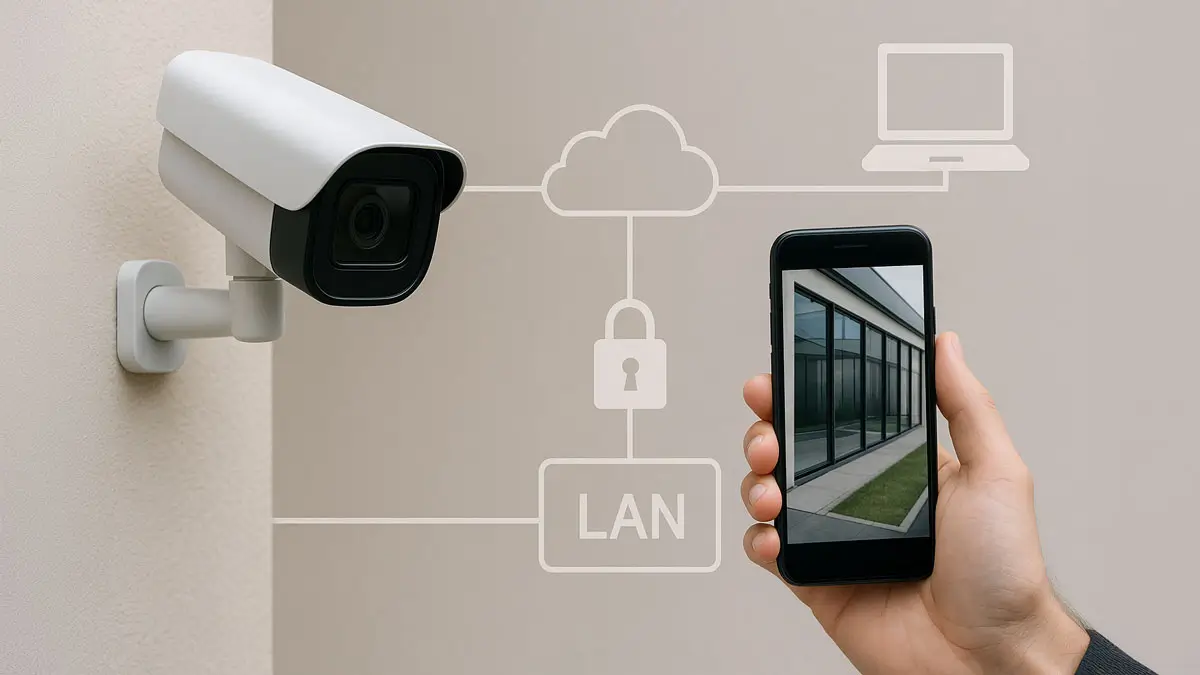
- Effectively diagnose the system remotely using Aylook Statistics, specifically developed for real-time monitoring of the LAN network and all accessories that make up the security system.
To summarize, here are the four key points through which Aylook follows the recommendations of the new CEI 79-3:2024 edition and, more generally, CEI EN 50131-1:
- Use of video analytics referenced by the Integrated Security Index (IISb);
- Native integration with intrusion alarm control panels from the manufacturers most widely used on the market;
- Transmission of camera fault and tampering alerts to the alarm control panel;
- Integration and support for UPS systems as secondary power supplies in the event of a power source failure.
If you are an installer or system integrator interested in exploring the four points above and gaining a deeper understanding of the standard, we can work together on important projects that demonstrate the value of the IIS, giving you an additional tool to differentiate yourself from the competition.